Discovery Meeting Registration
We are hosting a variety of webinars, please join us!
The Webinar Team

Doc Watson
Vice President
Doc Watson brings more than 35 years of experience in educational technology. In 1991 he designed one of the first computer-mediated distance learning programs — an early Learning Management System built for healthcare education. He spent 12 years with a regional Student Management System provider and has since led projects spanning school security and data virtualization.
Doc believes that a family's first encounter with a school district sets the tone for everything that follows. The RightPath™ suite was built around that belief — delivering a welcoming, organized intake experience that reflects how much every student matters. He is equally committed to evaluation systems that reinforce district culture and support the professional growth of every staff member.
Ruth Arezzi
Executive Director Educational Services
Ruth started at RRT in 2006 and has ensured that all programs drive toward district needs and student success. From Blended Classrooms and programs like Credit Recovery and Homebound Instruction, to specialized services like Curriculum Development, Assessment Creation and Data Informed Instruction, Ruth’s core focus is to ensure individualized education opportunities and success for every student. Prior to joining Right Reason, Ruth was a certified instructor specializing in K-6 Education.

Tabatha Campion
Educational Specialist, Program Support
Since 2013 Tabatha has worked to oversee the operation and development of online e-Learning courses for Right Reason. She is deeply committed to using the power of various multi-media platforms to create engaging content for our 21st century learners. Tabatha earned a Bachelor of Science and a Masters of Education in Instructional Technology from East Stroudsburg University of Pennsylvania. She is a certified K-6 teacher and a certified Instructional Technology Specialist PK-12.
Current Discovery Meeting Topics
Welcoming Families at Registration - Efficient, Friendly & Complete
Transform your Registration Office into a Welcome Center!
Comprehensive Enrollment, School Choice or Program Application And Lottery System For Efficient And Equitable Enrollment
15 minute Discovery Meeting
Your SIS/SMS collects data. Your Registrar runs an Operation.
Most platforms treat registration as form-capture. Your registrar knows better — it's medical clearances, exception handling, family communication, data quality at intake. The gap between what your SIS expects and what actually happens in your office costs you time, accuracy, and family trust.
Our webinars show you what closing that gap looks like — in practice, in your district, with the right tools.
15 minute Discovery Meeting
Nurturing Trust: Ensuring Integrity in Your Lotteries
When families apply for a Pre-K seat or a spot in a competitive program like CTE (Career and Technical Education), the stakes feel very real to them. How that process is run — and whether families believe it’s fair — can shape their trust in your district for years to come.
15 minute Discovery Meeting
Evaluate ALL Your Staff - YOUR Way!
All Staff Types
All Rubrics
Are observations taking too long?
We've got you covered!
NYS Approved Benchmarks
The most efficient evaluation system available!
15 minute Discovery Meeting
Less Compliance. More Leadership. That's 3012-e
APPR (3012-d) locked districts into annual observations for every educator — and growth measures tied to standardized tests. STEPS (3012-e) changes both.
Under the new STEPS framework, tenured educators can move to multi-year cycles, freeing principals from the compliance treadmill and redirecting that time toward real instructional leadership. Measures are no longer tied to standardized assessments — districts choose from NYSED's suggested options or design their own, bargained locally. The right platform makes all of it work. In 15 minutes, we walk you through what's now possible — and what gets in the way.

Registration
Friendly or Frustrating for Families?
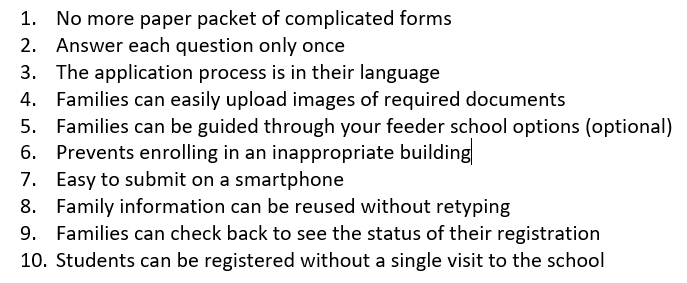
- Is Registration still based upon a paper packet of complicated forms?
- How many time do families have to answer the same questions?
- How many languages is your application available in?
- Is it easy for applicants to upload images of required documents?
- Does the process guide families through your "feeder school options?"
- Does the process prevent enrolling in an inappropriate building?
- If online, is it easy to submit the application on a smartphone?
- Can family information from one student registration be used for another student without re-typing?
- Can families check back to see the status of their registration?
- Can students be registered without a single visit to the school district?
School Choice / Program Application
Could the Process Be More Friendly, and Equitable?
- Is the school choice or program application process based upon a paper packet of complicated forms?
- Is the required process clear to applicants?
- How many languages is your application available in?
- Does your process delay application processing causing kids to miss classes?
- Is there an appearance or reality of Inequity in school/program assignment?
- Immigrants
- Gender
- Ethnicity
- Sibling attendance
- Etc.
- Would an efficient, balanced lottery process be a dramatic improvement?
Staff Perspective: Are your processes Efficient & Effective?
Registration
Is Your Process Frustrating for District Staff?
- Does your process require data entry by district staff?
- Are applications queued by registrar and/or status?
- Can your staff compare submitted documents with relevant data side-by-side for accuracy?
- Is your Registration compliant with regulation deadlines (e.g., McKinney Vento, etc.)
- Does your registration process prevent out of district address fraud during the application process?
- Can staff use templated emails to communicate with families?
- Is your medical clearance process securely online and part of the registration process?
- Is building availability visible during the process?
- Could flexible workflows between district staff and building staff be more efficient?
- Could secure, separate workflow for medical clearance ease delays in processing
- Are you concerned about Data/Document retention issues?
School Choice / Program Application
Could the Process Be More Efficient and Equitable?
- Seamless and flexible workflow between district staff and building/program administrators
- Building/program availability visible during the process?
- Avoid delayed application processing causing kids to miss classes
- Assure accurate data
- Avoids appearance or reality of Inequity in school/program assignment
- Immigrants
- Gender
- Ethnicity
- Sibling attendance
- Etc.
- Automatic waitlist updates upon acceptance refusal
- Duplicate application identification
- Integration with SMS after enrollment completion
Please Note: All times are EDT
Nurture Public Trust with Transparency & Integrity


We all understand the necessity of a lottery system, right?
Our programs and schools are in such high demand that we simply can't accommodate everyone!
Lotteries offer an excellent solution to meet our students' needs, but the process must be clear and transparent. Given the constraints of limited resources, we inevitably fall short of meeting the expectations of some families. It's crucial for families to trust the integrity we've built into the system. Many districts rely on spreadsheets or other solutions to randomize applicants, which can lead to unnecessary questions and public skepticism. Now, imagine having a dedicated tool designed specifically for this purpose, offering both the flexibility and controls needed to eliminate any doubts about the lottery's fairness.
Please Note: All times are EDT
Your SIS/SMS collects data.
Your Registrar runs an operation.
Registration - There are two sides to the challenge
On one side: Families.
They're applying to your schools — programs, choice transfers, open enrollment, specialized programs.
They expect to complete applications online, see status updates, get acceptance notifications, and be ready for orientation.

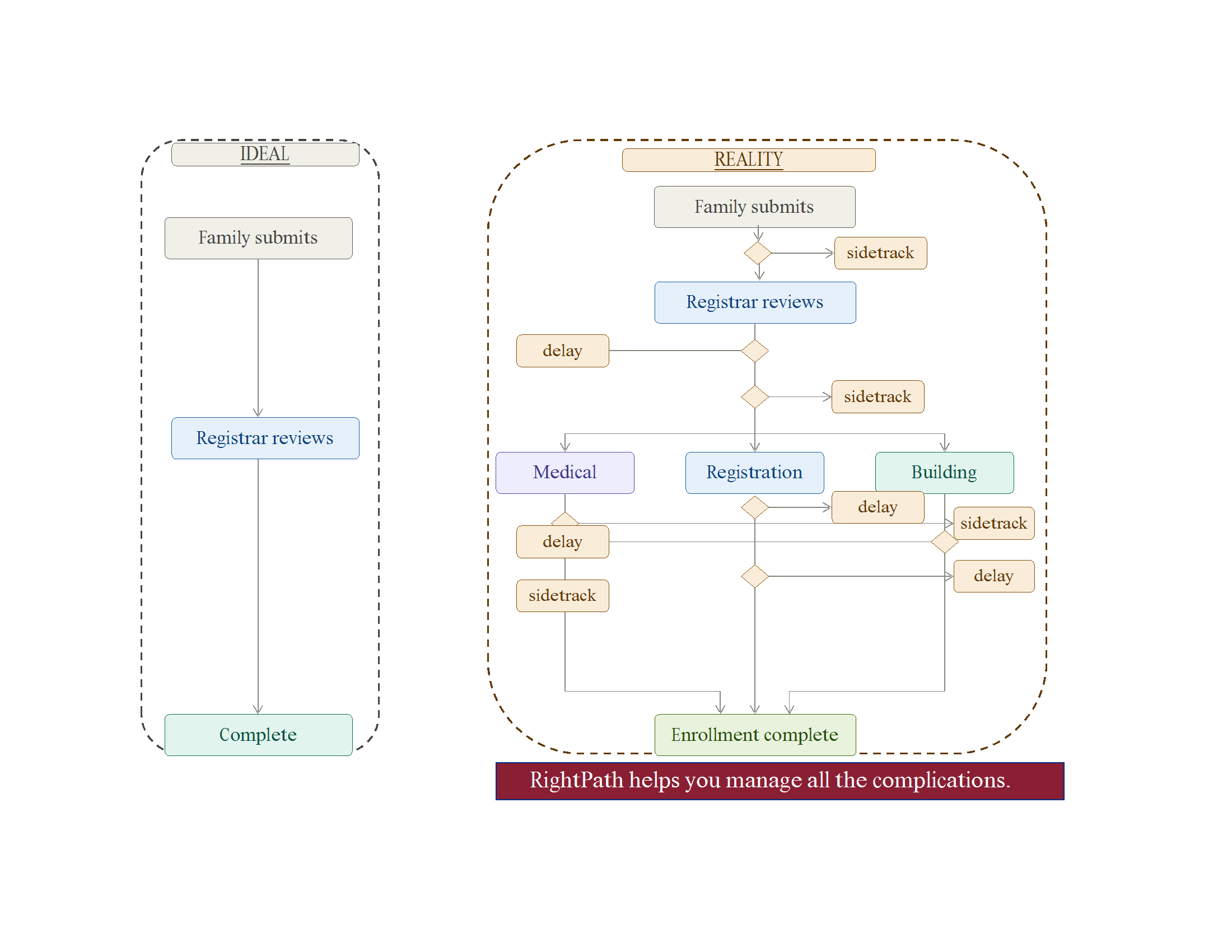
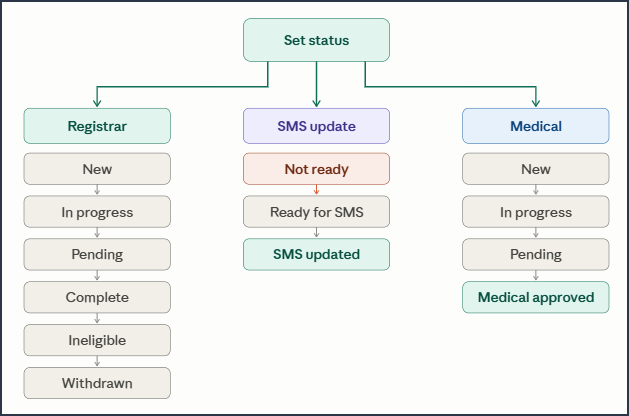
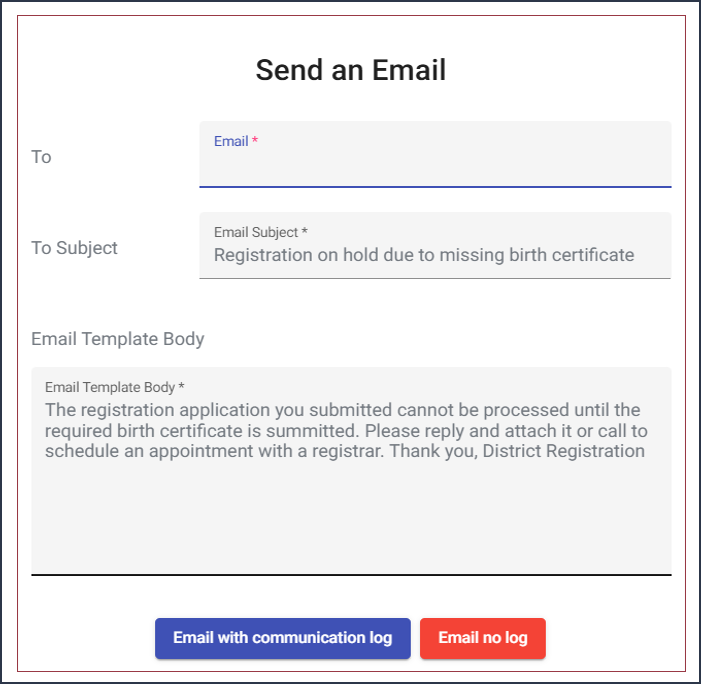
On the other side: Operations.
Your registrar is managing exceptions, processing documents, coordinating with nursing for medical clearances, updating waitlists, making program assignments, communicating back and forth with families who have questions or missing paperwork.
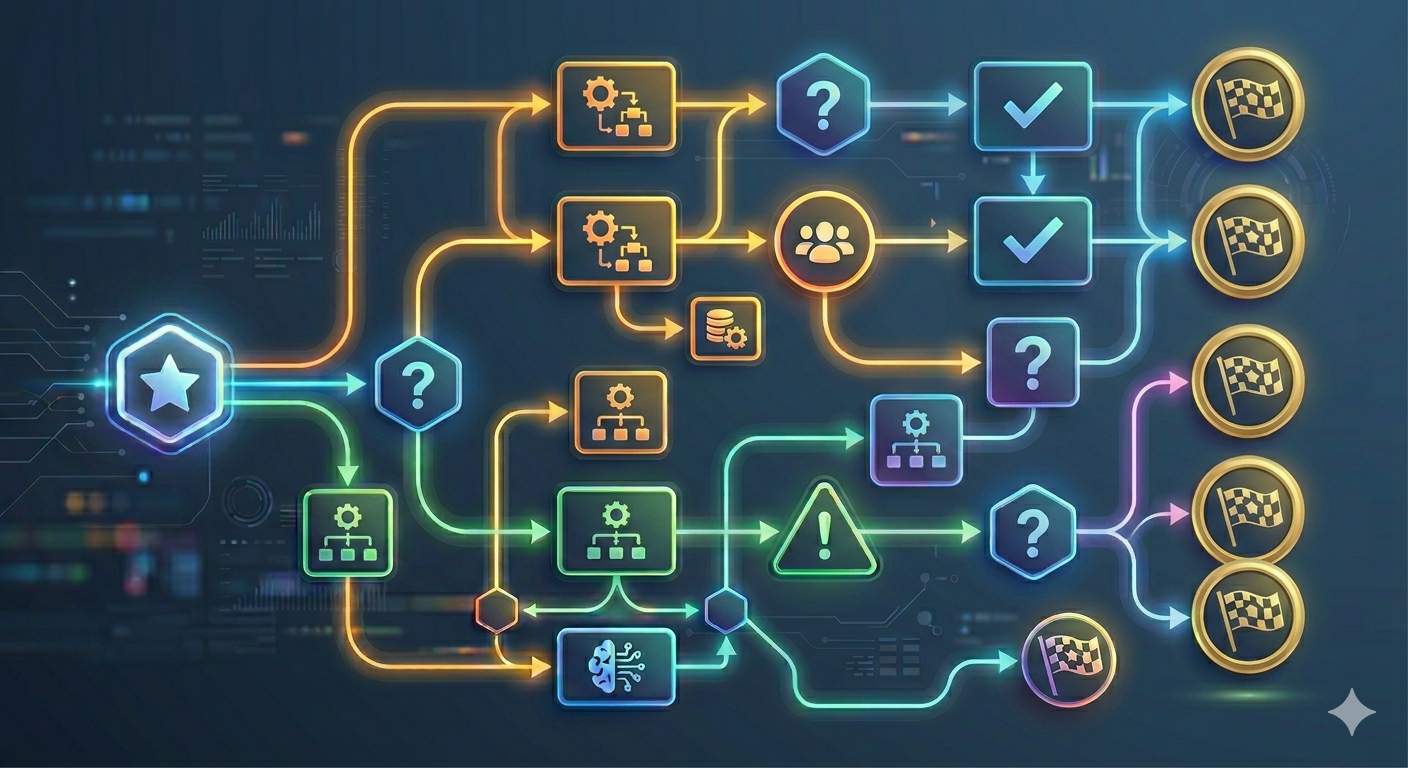
Your SIS was built to store the output of that process — the final student record. But it wasn't built to run the process itself. It doesn't know about exception paths. It doesn't handle the workflow between "application submitted" and "student enrolled." It doesn't orchestrate family communication, document management, or the back-and-forth that actually happens.
That gap — between what the SIS expects and what the registrar actually does — is where most districts get stuck. Form-processing tools treat registration as a data-capture problem only. Registrars know better.
What This Webinar Covers
In 15 minutes, you'll see:
- Where the SIS and registrar workflow diverge. What the SIS assumes happens automatically and what actually happens in your office. The tasks, the exceptions, the communication loops that keep enrollment moving.
- What "Welcome Center" actually means. It's not a fancy name for a form. It's a system designed around registrar workflow — family intake and operational efficiency together, on the same platform.
- The real impact of workflow design on your bottom line.
- Data quality at intake determines accuracy downstream (fewer corrections, cleaner SIS)
- Efficient exception handling means shorter timelines and less staff overtime or registration backlog
- Clear family communication reduces re-work and support burden
- Integrated document management eliminates paper and lost files
Who Should Watch
- Registrars — you live this every day; see how others are rethinking the workflow
- Administrative leads — if enrollment is a bottleneck, this is where to start
- Data/IT directors — understand what the SIS can't do, and why workflow matters
- Choice/open enrollment coordinators — see how successful districts scale program management
Please Note: All times are EDT
Who are your staff?

Walk through any school district and count the staff you see. Teachers in classrooms. A principal in the hallway. An assistant superintendent in a meeting. Now count everyone else.
The bus driver who gets your most challenging students to school safely every morning. The nurse managing chronic conditions, medication schedules, and the occasional crisis. The cafeteria team feeding 600 kids in 45 minutes. The custodian who makes the building work. The security staff who make it safe. Teacher assistants supporting student learning, the clerical team keeping the office functional for families who need help navigating the system.
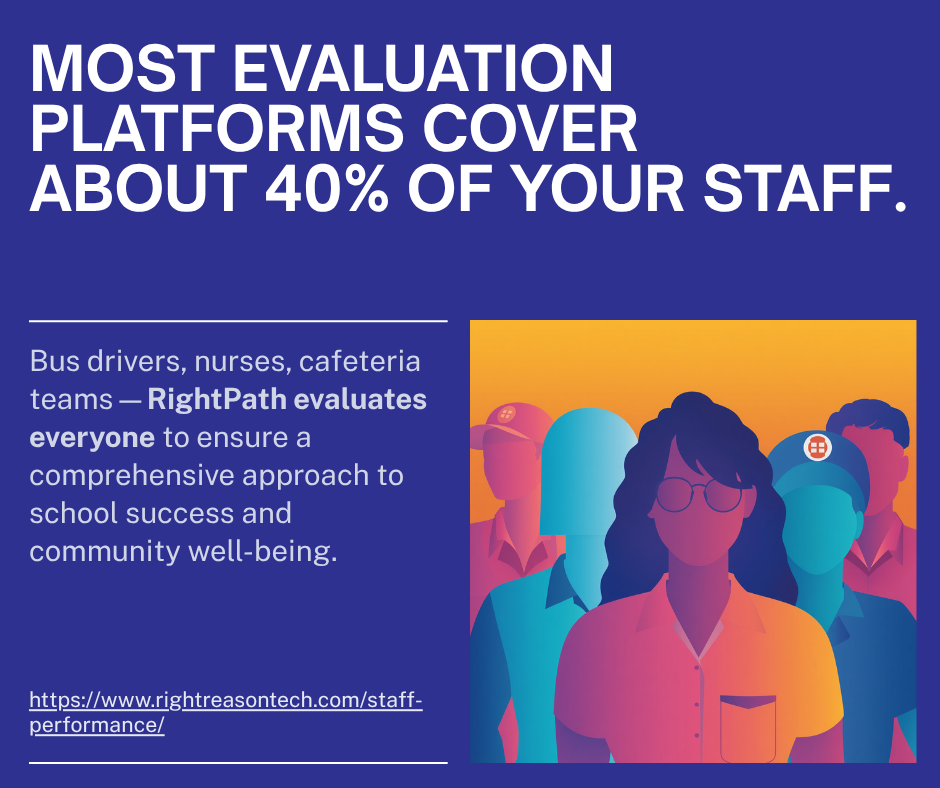
In most districts, these employees make up the majority of the workforce. And most evaluation platforms cover about 40% of them.
And in most evaluation platforms, they're an afterthought.
The gap most districts don't talk about
Educator evaluation software was built for educators. The frameworks, the rubrics, the observation workflows, the reporting — all of it was designed around classroom teachers and building principals. Which makes sense. APPR created a regulatory mandate, and vendors followed it.
But non-educator staff don't stop needing evaluation because their work isn't covered by 3012-d. Effective performance management for transportation, nutrition, nursing, clerical, technology, and security staff is an operational necessity — and in many districts, a contractual one. The question is whether it happens in a real system or in spreadsheets and paper forms nobody audits.
Most platforms solve this problem by pointing to an integration — a separate tool for non-certified staff that connects, loosely, to the main system. Which means two systems to manage, two contracts to maintain, two sets of training, and two data silos that don't talk to each other when you need a complete picture of your workforce.
One platform, every employee
RightPath™ was built to evaluate every employee in your district on a single platform. Not as a workaround. Not as a module bolted on after the fact. Certified teachers and principals. Non-certified staff across every operational department. Role-appropriate rubrics your district designs. Observation workflows or evaluation surveys that fit the actual work. Ratings, documentation, and reporting in one place.
For HR directors and operations leaders, this matters as much as it does for curriculum and assessment staff. You're not managing two evaluation systems. You're not reconciling data from two platforms at year-end. You're not explaining to your board why the cafeteria team's performance data lives in a spreadsheet while the teaching staff's lives in a platform.
Every employee. One system. One source of truth.
Please Note: All times are EDT
STEPS 3012e Transition in Plain Language
Measure What Actually Matters to Your District
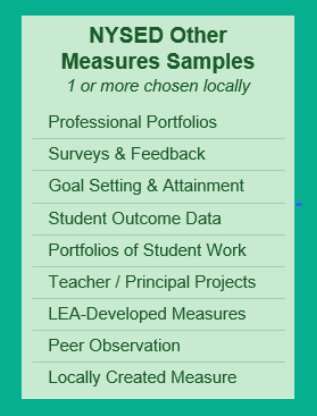
Under 3012-d, most districts were locked into Student Learning Objectives tied to state assessment data. For educators in non-tested subjects — art, music, PE, counseling, CTE — it never fit. Under 3012-e, that changes.
Districts now choose from eight NYSED suggested measures — portfolios, peer observation, goal setting, student outcome data, teacher projects, surveys, and locally designed instruments — or develop their own. Measure selection is bargained locally, not prescribed by Albany.
The right measure for your district depends on your instructional priorities. Our webinar covers how to think through the options — and what your platform needs to support whichever ones you choose.
Multi-Year Cycles: Time to Actually Lead
Under 3012-d, every educator gets a full observation cycle every single year. For a principal managing 40+ staff, that's dozens of formal observations, pre-conferences, post-conferences, and written evaluations annually — all due by June.
Under 3012-e, tenured educators can be evaluated across a two-, three-, or four-year window. For a 40-person staff with 28 tenured educators, that's roughly 10 intensive observations per year instead of 28. You get a 40–60% reduction in annual workload — time freed up for what actually matters: instructional coaching, school culture, real professional conversations.
Multi-year cycles don't mean less accountability. They mean better-targeted accountability, with depth instead of compliance paperwork.

Please Note: All times are EDT
Less Compliance. More Leadership. That's 3012-e
Free From Just Standardized Tests — Finally
Under 3012-d, growth measures were tied to Student Learning Objectives built around state assessment data. For educators in non-tested subjects — art, music, PE, counseling, CTE — it was a poor fit that never reflected their actual work. Many educators have never been comfortable with this methodology since it does not measure “the whole child.”
Under 3012-e, that mandate is gone. Districts now choose from NYSED's suggested measures — portfolios, goal setting, peer observation, student outcome data, surveys, locally designed instruments, and more — or create their own. Measure selection is bargained locally, not prescribed by Albany. For the first time, the measure can actually reflect what the educator does.
The right platform supports whatever measures your district negotiates — without requiring a technology change or custom build every time your contract changes.
Multi-Year Cycles: Time To Actually Lead
Under 3012-d, every educator got a full observation cycle every year. For a principal managing 40+ staff, that meant dozens of formal observations, pre-conferences, post-conferences, and written evaluations — all due by June.
Under 3012-e, tenured educators can be evaluated on two-, three-, or four-year windows. For a 40-person staff with 28 tenured educators, that's roughly 10 intensive observations per year instead of 28 — a 40–60% reduction in annual workload. Time freed for instructional coaching, professional conversations, and school culture.
Multi-year cycles don't reduce accountability. They target it better.
Please Note: All times are EDT