For many families, registering a child in school is one of their first real interactions with the district as an institution. How that experience feels — welcoming or overwhelming, clear or confusing, supportive or cold — leaves an impression that can last for years.
What Families Are Actually Feeling When They Walk In
Picture a parent who has just moved to your district. English is their second language. They’ve heard they need to register their child for school, but they’re not sure exactly where to go, what documents to bring, or what to expect when they get there. They worry about whether their immigration status matters. They’re not sure if they’ll be judged for asking basic questions. And if there’s an online form involved, they’re quietly dreading it.
That anxiety is real, and it’s more common than most administrators see. For families who are new to the country, uncomfortable with English, unfamiliar with how American school systems work, or simply not confident navigating digital forms and official paperwork, registration can feel less like a welcome and more like a test they weren’t prepared for.
And here’s the hardest part: most of those families never say anything. They don’t complain to the principal or call the central office. They either figure it out on their own, ask a neighbor for help, or quietly give up. And when they give up, their child starts the school year already behind — before a single class has been taught.
The Barriers That Get in the Way
Most registration barriers aren’t created on purpose. They accumulate over time as processes get built around the families who were easiest to serve. Once you see them clearly, they’re very solvable:
The First Impression Lasts
Registration is often the very first substantive interaction a family has with your district. Everything that follows — parent-teacher conferences, school events, report cards, IEP meetings — happens through the lens of that first experience. A family that felt respected and supported during registration brings that goodwill with them. A family that felt confused, dismissed, or overwhelmed carries that too.
Districts sometimes think of registration as an administrative function. But for families, it’s an introduction. It’s the district’s first answer to the question: are we welcome here?
A family that felt welcomed during registration is more likely to engage with the school, communicate with teachers, attend events, and advocate for their child’s needs. That engagement starts — or doesn’t — on day one.
What a Welcoming Registration Process Actually Looks Like
Getting registration right doesn’t require a complete overhaul. It requires intentional design around the families who need the most support, not just the ones who find it easiest.
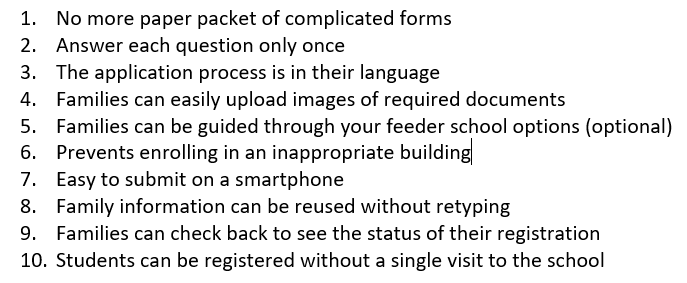
That means offering forms and instructions in multiple languages. It means making in-person support genuinely available — not just technically possible. It means a physical environment that feels approachable, not institutional. It means a document checklist that’s clear and non-threatening. And it means automated follow-up communications so families always know where they stand and what comes next.
Family A arrives at the district office to register their child. The form is English-only. The staff member at the desk is busy and points them to a computer kiosk. They struggle through the form, unsure if they filled it out correctly, and leave without confirmation that anything was received. They don’t hear anything for two weeks.
Family B never has to come in at all. They complete the application in their home language on their phone, sitting at their kitchen table the night before. The form walks them through each step clearly, in the language they chose. They get an immediate confirmation. Later that week they get a follow-up message letting them know their documents were received and what to expect next. When they do visit the school for the first time, it’s because they want to — not because the process required it.
Both families registered their child. Only one of them feels like this district truly welcomes their family and truly cares about their child.
This Is What Equity Looks Like on Day One
An equitable registration process isn’t just about having the right policies on paper. It’s about whether every family — regardless of language, background, technology access, or comfort with formal institutions — can actually complete the process with dignity and confidence.
The families who struggle most with registration are often the ones who have the most to gain from a strong relationship with their child’s school. Meeting them where they are, in the language they speak, with the support they need, isn’t going above and beyond. It’s doing the job.
The Bottom Line
How your district handles registration tells every family something about who you are and whether you value their presence in your community. A process that’s clear, welcoming, multilingual, and well-communicated doesn’t just make enrollment easier — it starts the relationship between families and the district on the right foot, and that foundation matters for everything that comes after.
RightPath™ Welcome Center was built for every family
Our Welcome Center module transforms school registration from a bureaucratic hurdle into a genuinely welcoming experience — with multilingual support, simplified online and in-person applications, guided document management, and automated family communication at every step. We designed it with every family in mind, not just the ones who already know how the system works.
NYSED Parents’ Bill of Rights for Multilingual Families →
Next: How a Transparent Lottery System Builds Community Trust →